
Mandi Bhav India team · 5 min read · Guide
A seven-day view can be more useful than a single observation, provided the underlying records are comparable.
Seven calendar days are not seven observations
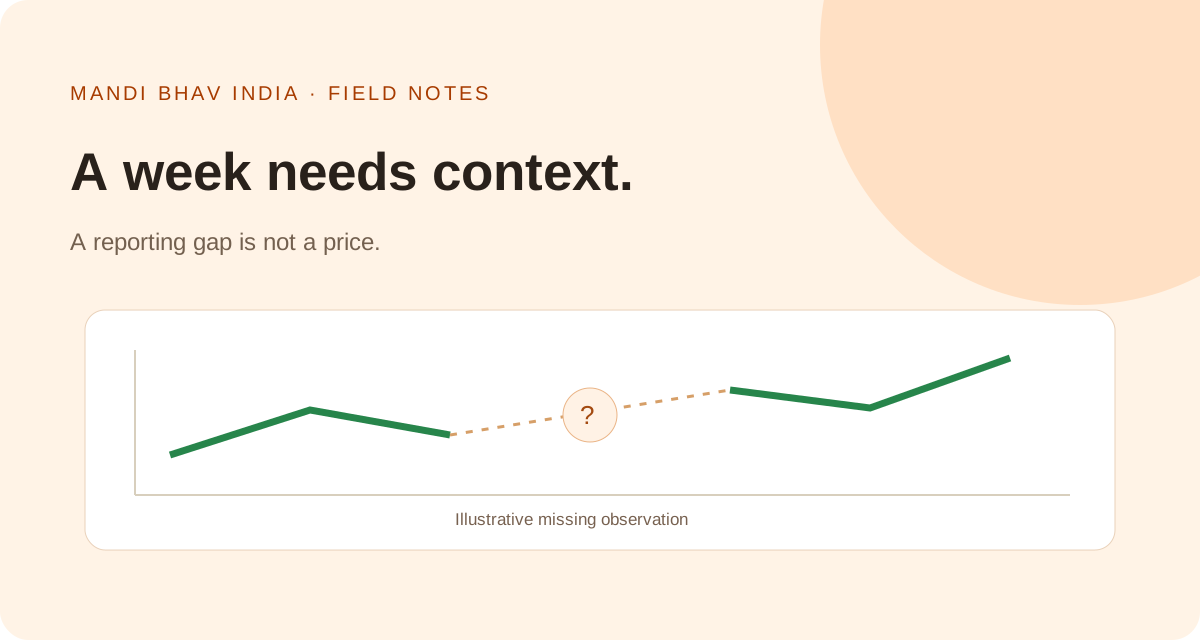
Markets do not necessarily report every crop every day. A requested week may contain fewer observations. A missing day should remain a gap; it should not be filled with an invented price.
Keep the record definition consistent
Look at the same commodity, variety, mandi and unit. If an overview combines varieties, understand whether it uses arrival quantities or another aggregation. A change in the mix of qualities can move a summary without representing the same crop’s price movement.
Describe what happened, then ask why
First identify the available reporting dates and values. A short rise or fall is an observation, not an explanation by itself. Supply, quality, arrivals and other conditions may matter, but unsupported reasons should not be presented as facts.
Use longer context carefully
A comparable period last year can add context only when suitable records exist. Seasonal patterns are not promises, and one week cannot establish what will happen next.
Make the question specific
Try: “Show the available garlic observations in Neemuch for the last seven days. Keep the reporting dates, identify missing days and explain the difference between a modal price and an average.”
Our approach
Mandi Bhav India is working on the stored historical coverage needed for these questions. Until that coverage is validated, workspace charts remain illustrative and the assistant should acknowledge unavailable records.
Service: Mandi Bhav India · Contact: support@mandibhavindia.com
Operator contact: Mandi Bhav India
Manasa, Madhya Pradesh 458110, India